Cycling training plan app
Cycling training plans work best as a commitment you can fit around the rest of your week. Start with your current riding, the goal you care about and the time you can reliably make available.
Available for iPhone
Choose the level you can sustain
Use your recent riding as the starting point: how often you get out, how long a typical ride lasts and how you feel when several rides fall in the same week. A familiar label is less useful than an honest look at the workload you can repeat. Returning after a break is also different from continuing a settled routine. If you are starting out, use the guide to your first structured cycling week to think through a manageable starting point.
Glood offers Beginner, Intermediate, Advanced and Elite during onboarding, with plans and workout recommendations for your chosen level.
Pick for the present rather than the rider you hope to become by the end. When comparing options, look beyond the hardest session to the ordinary week. Include travel, family commitments and recovery time in that comparison; the calendar is where an attractive plan becomes a realistic one.
Make the goal specific enough to guide choices
A long event, a hilly route and a short race do not ask for exactly the same preparation. Write down what the goal means in practice: riding for longer, handling sustained climbs or managing repeated hard efforts. Also decide whether there is a fixed date or simply a direction you want your riding to take.
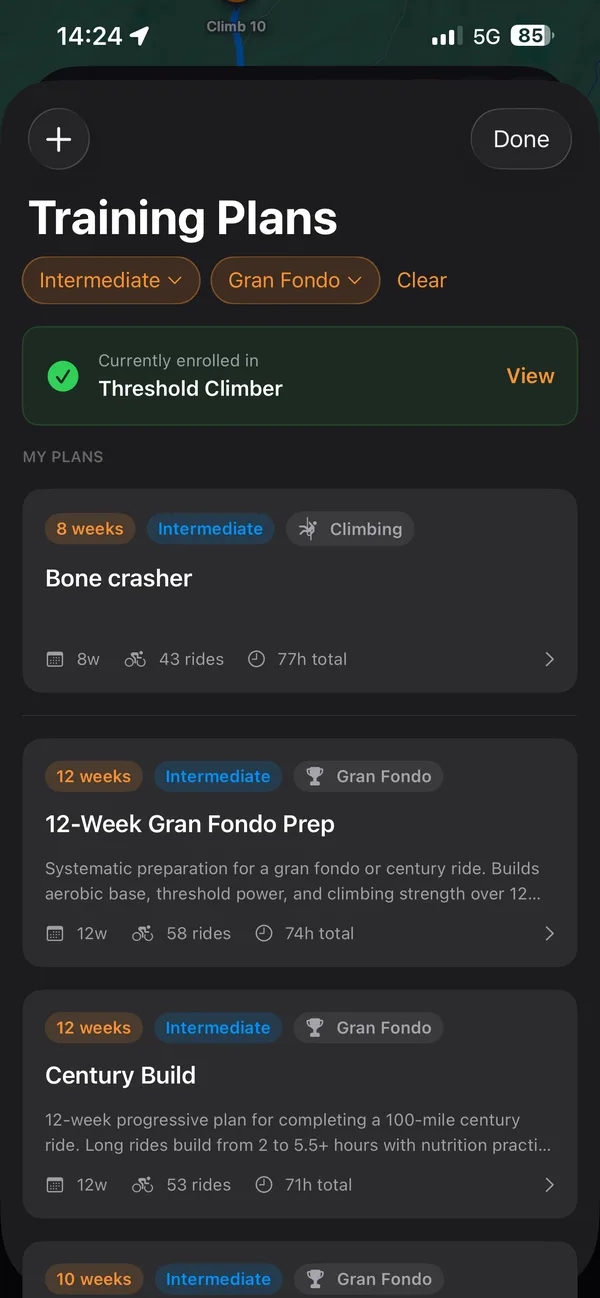
Filter Glood’s training plans by level and goal, review the weekly volume and read the plan week by week before starting. Compare cycling training plan summaries by goal before opening the full plan in Glood.
Compare the largest week with your available time, not only the first week. Keep a little room for the unexpected. If the plan regularly depends on hours you do not have, choosing a more manageable starting point is a useful decision rather than a failure of ambition.
How training phases usually fit together
A common approach moves through base, build, peak and taper phases. These describe the purpose of a period of training; they are not a promise that every plan uses the same order or that each week gets harder.
- Base work emphasises regular riding and aerobic endurance, establishing a routine to build on.
- Build work introduces more demanding or more goal-specific sessions while maintaining recovery.
- Peak work focuses more closely on the efforts expected in the target event.
- A taper reduces training volume before the event, often retaining some intensity rather than stopping all riding.
Rest days and easier weeks belong in the overall pattern. More work is not automatically better work, and a recovery week should not be judged only by its smaller total. Read the sequence of weeks before deciding what any single day is meant to achieve.
Understand the week, then the day
Choose a start date in Glood and follow the plan’s calendar.
On Home, see today’s workout from your enrolled plan, a note on today’s form and your plan’s progress.
After at least 14 days of training data, Suggested Week shows target load and suggested day types; these suggestions do not automatically edit the calendar or complete workouts.
For your own preparation, identify which sessions need a clear stretch of time and which days should stay easy. Keep the purpose of the week in view if work or weather changes the schedule. Avoid squeezing every missed hard session into the remaining days simply to make the calendar look complete.
Open structured workouts to read their blocks.
Use training load and performance over time alongside how you feel when reviewing the recent pattern, rather than treating one workout as the whole story.
Build your own plan deliberately
Build your own training plan in Glood, arranging it week by week.
Before filling a week, write down its purpose and the time you have available. Place the important session first, then consider what recovery and easier riding should surround it. Leave some flexibility for ordinary life. An empty day can be a deliberate part of the plan, not an unfinished box to fill.
Questions before your ride
Is it only for experienced riders?
No—Glood includes a Beginner level as well as Intermediate, Advanced and Elite.
How much time should I commit each week?
Commit the time you can sustain, then compare it with the plan’s busiest weeks. Count preparation and recovery as part of the commitment, not just the hours spent pedalling.
Should I make up every missed workout?
No, do not automatically compress missed sessions into the next few days. Reconsider the week’s purpose and available recovery time before deciding what to keep; a missed day does not make every remaining day a hard one.