Climbs on your route
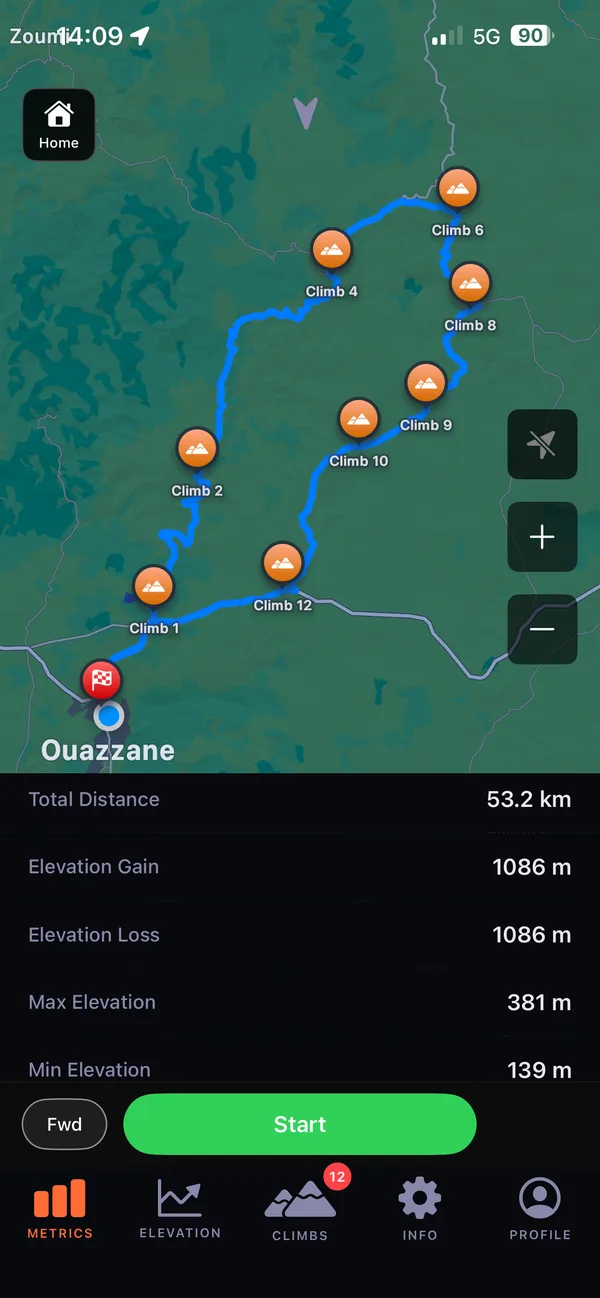
Looking at the climbs on your route gives a hilly ride some shape: where to settle into a steady effort, where to eat and drink, and whether the last climb deserves a little more energy saved for it.
Available for iPhone
Read the hill before deciding how to ride it
A long climb and a short, steep ramp ask different things of a rider. On the longer hill, starting conservatively can help keep the effort manageable. On the ramp, having an easier gear available matters before the slope catches you by surprise. Distance alone does not describe either situation well.
Look at where each climb sits in the outing. A hill near the start may meet fresh legs, while the same hill after a long ride needs a different pacing decision. If several climbs come close together, include the roads between them in your plan rather than treating each ascent as an isolated challenge.
Think about food and water before a demanding section. Choose suitable places to eat or drink without compromising bike control, and do not assume every descent will offer a convenient break. This is a preparation choice, not a reason to chase a particular climbing speed.
Gradient: how steep, not how long
Gradient describes the rise relative to horizontal distance, expressed as a percentage. An 8% gradient means roughly eight metres of vertical rise for every hundred metres horizontally. It says how steep the road is; it does not say how many kilometres of climbing remain.
An average gradient spreads the rise across the whole climb. A gentler opening and a steep middle can produce the same average as a more even slope. Use the average as an overview, and leave room in your gearing and pacing for sections that feel harder than that single number suggests.
If you inspect a profile, check its horizontal and vertical scales before comparing it with another route. A chart drawn with a taller vertical scale can make a modest hill look dramatic. Read the distances and elevations rather than judging the hill by the shape alone.
Elevation gain: how much you climb
Elevation gain adds the uphill changes in height. It is different from the height of the highest point and from the difference between the start and finish. A loop that returns to its starting elevation can still include substantial climbing along the way.
Totals are useful, but their distribution matters too. The same amount of ascent could be spread across rolling roads or concentrated in one sustained climb. Elevation data can also contain measurement noise, and different smoothing methods can produce different totals. Avoid treating small differences between two recorded figures as a verdict on which ride was harder.
When choosing a GPX file or route link, look for elevation data if you want to inspect the hills ahead. Compare the planned route with current road information and any advice from the person who supplied it.
What Glood shows
On a route with elevation data, Glood marks climbs and, during a planned ride, previews the next climb’s distance, average gradient and elevation gain.
Browse the route’s climbs listed one by one, and open an individual climb.
On a free ride, climb candidates ahead are shown when road and elevation data is available.
After recorded rides, revisit climbs in your climb passport and see a map of the roads captured in your activity history.
Turn the preview into a practical plan
- Check that your easiest gear suits the steep sections you expect to encounter.
- Choose a steady opening effort, with room to adjust when the slope or conditions change.
- Allow time for stops and the descent as well as the ascent when planning the outing.
If climbing is a regular goal, compare training plans by level and goal with the demands of the routes you enjoy. Start with the riding you can repeat consistently, rather than making every hill a test.
Questions before your ride
How do I see the climbs before I ride?
Load a route with elevation data: Glood identifies its climbs on the map before the planned ride.
Does average gradient tell me how steep every section is?
No, it summarises the climb rather than every stretch of road. Steeper ramps and flatter sections can be hidden within the average, so consider the profile and length as well.
Is elevation gain the same as the highest point?
No, elevation gain adds the uphill changes, while the highest point is a single altitude. You can ride several hills, descend between them and finish low down while still accumulating a large amount of climbing.
Prepare for the climbing
To turn route preparation into practice, read how to train for climbs for pacing, session types and a gradual start on hills.